Comment mesurer et calculer la taille d'une hélice de bateau?
Updated June 2025 The propeller is the part of the boat that is most in contact with the water. As a result, it is the one part of the boat that is most likely to degrade quickly due to the mechanics of the engine or the salinity of the water.
It is important to know how to measure the propeller of your boat, in case you need to replace it or purchase related equipment like a propeller guard.
Why measure a boat propeller?
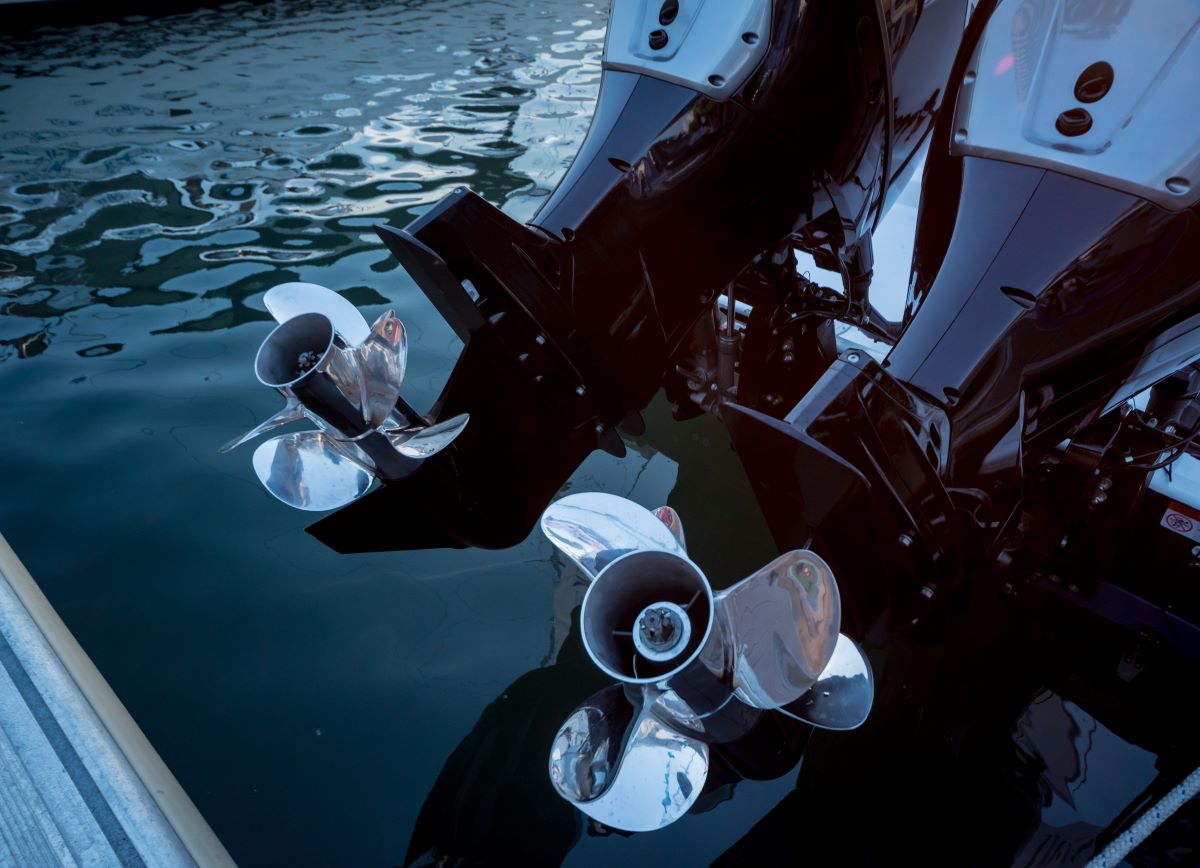
The propeller is among the most important parts of a boat, designed to push it forward or backward through the water.
Replacing a boat propeller
You might need to replace your boat's propeller if it's damaged or stops working correctly.
When it's time for a replacement, you'll need to know the specific characteristics of both your current propeller and your boat's electric motor. You can then use these measurements to find a new propeller yourself or provide them to a dealer to help you find the right part.
Purchasing a propeller guard to prevent propeller strikes
Purchasing a propeller guard is a good idea primarily because it significantly enhances boating safety by acting as a physical barrier.
Here's why this is beneficial:
- Prevent injuries to people: Propellers, especially when spinning at high speeds, can cause devastating and even fatal injuries to swimmers, divers, or anyone who accidentally comes into contact with them in the water. A propeller guard encases the propeller, preventing direct contact.
- Protect marine life: Propeller guards can also help protect marine animals from being struck by the spinning blades.
- Reduce propeller damage: The guard can also protect the propeller itself from damage if the boat strikes submerged objects like rocks, logs, or debris, potentially saving you costly repairs or replacements.
What parts of my boat propeller should I measure?
Before diving into how propellers are measured, let's first go over the measurements used to define a propeller's size.Diameter of the propeller
The diameter of a propeller informs how the boat's engine is used. The larger the diameter, the more the engine will strain to put the blades in motion.Pitch of the propeller
The pitch of a propeller is the distance traveled by the blades during one complete revolution or spin cycle. This measurement is also key because it informs the engine's round per minute (RPM). This information indicates the engine speed and the top speed of the engine.- A short pitch makes your starts quick, which is useful for sports or water skiing
- A long pitch makes starting and accelerating more difficult because the propeller can't reach its maximum speed as quickly
The eaiest way to measure a boat propeller
A simple way to calculate a propeller’s measurement is to look for the information on the equipment itself. Whether you have an inboard motorboat or outboard motor, this data is found either on the inside or outside of the hub of your propeller.The measurements will be presented in the following format: 15 X 27.
The first number (15) is the diameter of your propeller and the second (27) is the pitch.
The notation may change depending on the type of engine, the type of propeller and the number of blades.
How to measure your propeller for propeller replacements
The calculation of a boat propeller includes the measurement of its diameter and pitch. This information is usually expressed in inches unless stated otherwise. Over time, your propeller’s manufacturing labels may weather. In this case, it is possible to manually measure your propeller.
To illustrate the calculation method, we provide an example below. Note that, whatever the result obtained in all the steps, you must always round up and avoid decimals. This will make it easier to choose your propeller when you need to replace it.
Understanding propeller sizing primarily involves its diameter and pitch, typically expressed in inches. Don't worry if your propeller's original labels have faded over time; you can always measure them by hand.
Let's look at an example. It's important to remember that for all calculations, you should always round up to the nearest whole number, avoiding decimals. This is the simplest way to get the right measurements for choosing a replacement propeller.
To determine the propeller’s diameter:
- Measure the distance from the hub (center part) to the tip of one of your blades
- Multiply this distance by 2 to get the total diameter
To determine the propeller’s pitch:
- Determine the angle between the hub and the propeller blade using a protractor. To do this, draw a line perpendicular to your hub. Place the base of your protractor on a blade. Then measure the angle between your line and the blade
- Write down the angle - we'll use 20 degrees as an example. Then use the TAN function on your calculator:
| Angle | Tangent |
| 20° | 0,36397 |
- Then multiply the tangent by 6.2831 (this multiplier is a fixed number and cannot be changed):
| Tangent | Multiplier | Result |
| 0,36397 | 6,2831 | 2,28685 |
- Then multiply the result by the radius of your propeller. The diameter is 25 inches, so your radius will be 12.5 inches. This will give you the pitch of your propeller:
| Step 5 results | Radius (half the diameter) of propeller | Pitch of propeller |
| 2,28685 | 12,5 | 28,58 |
Given these steps, you may as well determine these measurements yourself or use an online boat propellor calculator that help you determine the pitch of your propeller.
How to measure your propeller to purchase a propeller guard
You'll also need to take measurements so that you can purchase the correct propeller guard for your boat. However, it's generally not the propeller's diameter and pitch that are the primary measurements you need for the guard itself.
Instead, most propeller guard manufacturers require you to measure specific distances on your outboard or stern drive unit. The most common measurement needed is the distance from under the anti-cavitation plate down to the bottom of the skeg. This "Dimension A" as it's often called, helps determine the overall height and diameter of the guard needed to properly enclose your propeller.
Why not just the propeller diameter? While your propeller's diameter is related, a propeller guard needs to fit around the entire lower unit and the propeller itself, with some clearance. Simply knowing the prop's diameter isn't enough to ensure a proper fit that won't interfere with steering or cause other issues.
It is very important that you follow the specific sizing instructions provided by the propeller guard manufacturer. They will have charts or diagrams that show exactly what measurements you need to take on your motor to match it with the correct guard size.
Boat safely with National Boating Safety School
Determining the measurements of your propeller demands that you are comfortable with numbers. Remember, you can always check the information on the propeller itself, or even contact the manufacturer. If you know your propeller measurements, you can better understand the operation and power of your engine, and be prepared to purchase the right propeller guard for maximum operational safety and efficiency.
Still want to learn more about safe boating in Canada? Register for our online boating course and learn everything you need to know about boating safety from the National Boating Safety School.