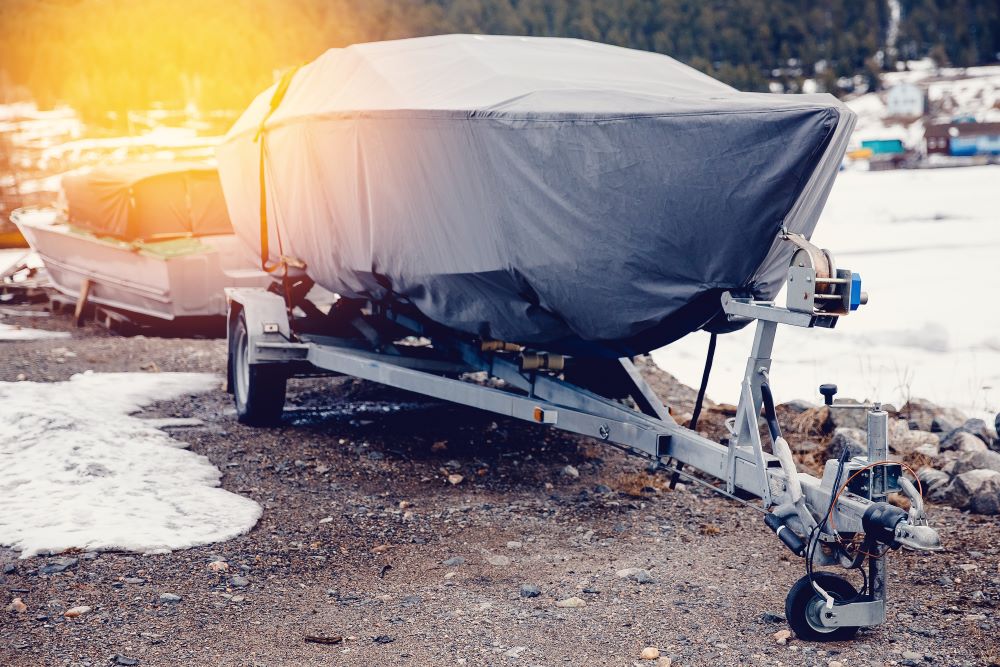
Hiverner un bateau : les étapes à suivre selon le type de moteur
Updated May 2025 As winter's harsh weather draws near, there are a few simple steps motorboat owners should take to winterize their vessels.
This article will explain why winterizing your boat motor is key to safe and smooth engine performance, and guide you through the process for both outboard and inboard motors.
How to winterize an outboard motor
Outboard motors are boat propulsion systems that include a motor, gearbox and propeller or jet drive in a self-contained unit that is designed to be mounted outside the transom.
Steps for winterizing an outboard motor:
1. Flush the motor
Using fresh water, flush the motor with a flusher or by running it in a tank full of clean water. This step removes salt, sediment, and contaminants, preventing corrosion and buildup in the engine's cooling system.
2. Clean the powerhead and exterior surfaces
Remove as much dust and debris as possible. A thorough cleaning helps prevent dirt from settling in and causing issues over the long storage period.
3. Fill the oil tank with the right type of oil
Using fresh oil and sticking to the type of oil recommended in the engine manual, is the best way to ensure proper lubrication and protection for internal components during dormancy.
4. Change out the oil filter
Replacing the old oil filter alongside the oil is the best way to avoid circulating contaminants from the previous season.
5. Change the oil in the gear case and replace the seals on the drain plugs
Fresh gear oil lubricates and protects the gears, while new seals prevent leaks and water intrusion.
6. Spray the gear case with fogging oil to prevent the components from rusting
Fogging oil creates a protective barrier, safeguarding metal parts from moisture and corrosion.
7. Drain the fuel from the fuel filter and replace with new fuel
Removing old, potentially degraded fuel and replacing it with fresh fuel prevents fuel system issues and provides stability. Learn more in our guide to cleaning a boat fuel tank.
8. Replace the fuel water separator filter (if applicable)
A new fuel water separator filter ensures that any water is effectively removed from the fuel, protecting the engine from damage.
9. Drain the fuel from the vapour separator tank or carburetor (if applicable)
This step helps prevent fuel from degrading and gumming up these critical components during storage.
10. Grease all pivot points and seals inside and outside the motor
Applying grease to these areas maintains smooth operation and protects against wear and tear.
11. Grease the prop shaft
Greasing the prop shaft prevents corrosion and makes it easier to remove the propeller in the spring. This is necessary both to clean and to measure the propeller for replacement or safety purposes.
12. Disconnect the battery
Remember to charge your battery at least twice over the winter. Disconnecting the battery prevents drainage, and periodic charging maintains its health for the next season.
13. Spray the powerhead and rubber components with fogging oil
This protects sensitive engine parts and rubber from moisture and deterioration over the winter months.
14. Cover the engine with a waterproof tarp or canvas
A protective cover will shield your engine from elements like rain, snow, and UV rays, prolonging its life.
15. Store the engine in a dry place (if possible)
A dry storage environment significantly reduces the risk of rust, corrosion, and mold growth on the engine.
How to winterize an inboard motor
Unlike outboard motors, which are attached to the stern of a boat, inboard motors are housed inside the hull of the boat, either in the bilge or in their own engine room on large vessels.
Steps for winterizing an inboard motor:
1. Flush the motor with fresh water
This is crucial to remove any saltwater, sediment, or contaminants from the cooling system, preventing corrosion and buildup.
2. Use an oil vacuum pump to drain the oil from the engine
Do not let any oil drip into your boat during this process. Employing a vacuum pump allows for a clean and efficient oil change, protecting your boat's bilge from spills. Remember that Canada has strict boat pollution laws, and toxic substances should never be leaked into the water table.
3. Change out the oil filter
Replacing the old oil filter along with the oil ensures that no contaminants from the previous season are circulated.
4. Replace the oil using the type recommended by the manufacturer
Using fresh, manufacturer-specified oil provides proper lubrication and protection for internal engine components during storage.
5. Place the water pump intake hose in a bucket of clean water and run the motor for around 10 minutes to let the water drain out
This helps to thoroughly flush the engine's cooling passages and ensures all water is removed before introducing antifreeze.
6. Change out the transmission fluid
Fresh transmission fluid protects the gears and internal components from wear and corrosion during the off-season.
7. Remove or replace the spark plugs (as needed) and put some motor oil inside the cylinders
Adding a small amount of oil to the cylinders lubricates the cylinder walls and prevents rust formation during storage.
8. Fill the cooling system with antifreeze
Introducing antifreeze prevents water within the engine's cooling passages from freezing and causing costly damage as temperatures drop.
9. Cover the boat with a specially-designed tarp or canvas
A fitted boat cover protects the entire vessel from the elements, including snow, rain, and UV damage, throughout the winter.
The importance of winterizing your boat motor
When done correctly, winterizing a boat motor protects it from various types of damage caused by cold or inactivity.
For example, when a motor isn’t properly winterized, there may be water left in certain components. When temperatures fall below freezing, water trapped within the boat's motor expands as it turns to ice, creating significant pressure that can cause components to crack or break. Repeated freezing and thawing can worsen this damage over time.
In addition, winter often brings high humidity levels that can rust the metal parts of the motor, causing damage and other problems.
Winterizing your motor is the best way to maximize its lifespan and prevent the damage caused by freezing and corrosion.
Besides, winterizing your boat motor will save you a lot of time and energy when boating season starts up again in the spring!
Learn more about safe boating year-round with the National Boating Safety School
If you take the time to winterize your boat by following the steps outlined above, you will maximize your craft’s lifespan and start off on the right foot next spring. Taking to the water means taking responsiblity for all elements of safe boating, including boat maintenance.
In addition, Canadian boating law stipulates that anyone operating a motorized recreational watercraft on Canadian waters must carry a valid proof of competency. Obtaining your official Pleasure Craft Operator Card is easy and can done 100% online. At the National Boating Safety School, it only takes a few hours to complete the Transport Canada approved boating safety course. Register now, and next spring, you’ll be ready to go!